
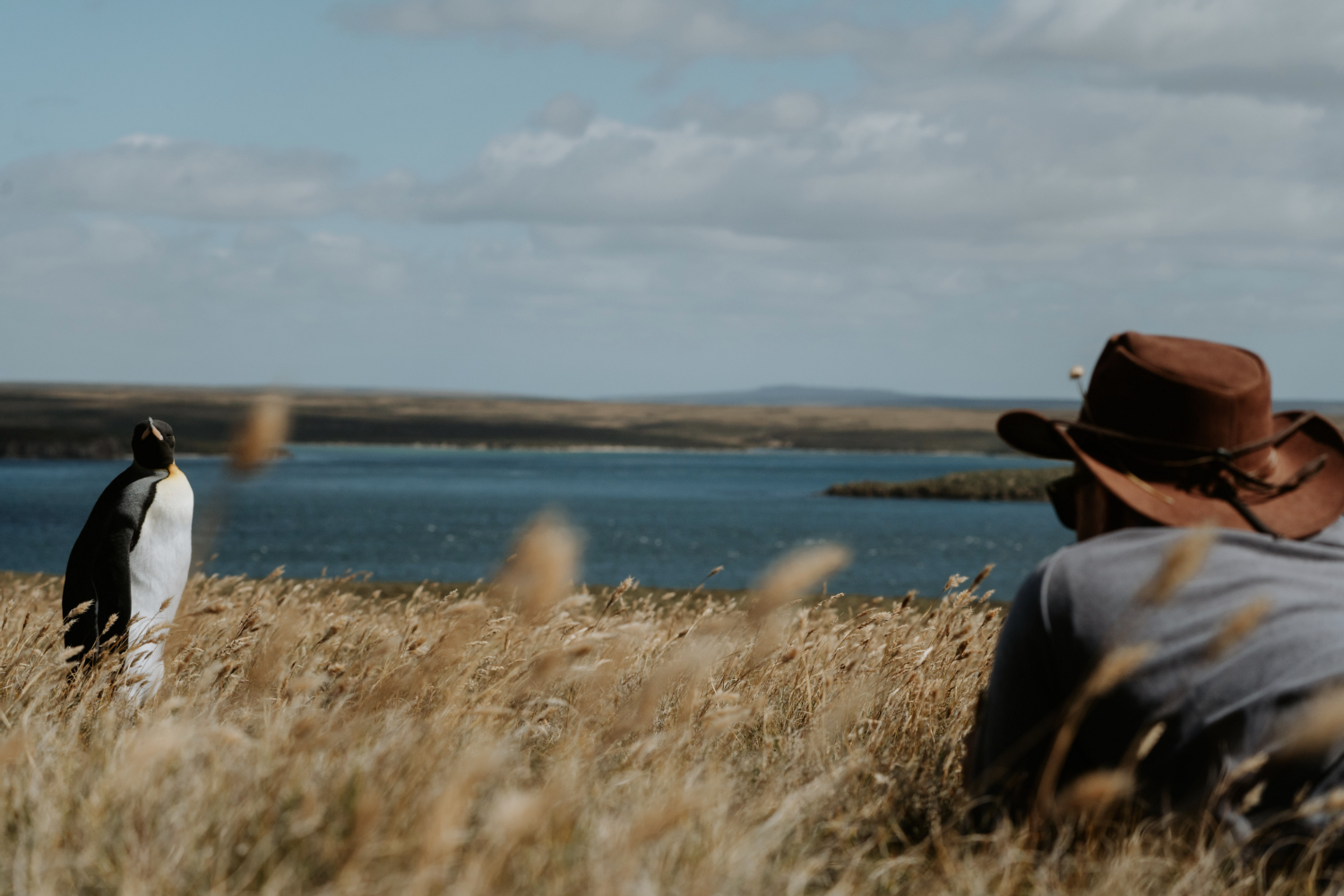
Hello family and friends!
We have recently finished reviewing our photos and reflecting on our time in the Falkland Islands and wanted to share a little update, and a short movie (click on the image below).
In planning our trip, Ben and I had flirted with the idea of visiting the Falkland Islands, leaving it penciled in the sidelines as a just-in-case the opportunity arises. But it wasn’t until a stormy day on the boat in Antarctica, anchored and sheltered from the weather, when we watched a short film featuring two brothers surfing in the Falklands. We love to surf where we don’t know what to expect (world class waves are not a necessity for us two average surfers!) and are easily pleased as long as it involves a little adventure to get there, no crowds to witness our wipeouts, and hopefully a stunning backdrop. It seemed like we could tick all these boxes in the Falklands and the incredible wildlife and landscape showcased in the film sealed the deal for us and we flew there a few days after getting back from Antarctica.
The Falkland Islands
These islands, also known as the Islas Malvinas, are a South Atlantic 700-island archipelago on the Patagonian Shelf. It is a self-governed overseas territory of the UK with a population of around 3,200 (a good portion being English military) where the way of life is so unique, that some people call it the Falkland Dream. To access the island you need to have pre-booked accommodation for at least one night on arrival, proof of enough money to cover your travels, and a search and rescue insurance, which reminded us that we weren’t going to Disneyland. So we hired a car, booked one night of accommodation in Stanley on East Falkland, with the plan to camp and sleep in our car for majority of our stay. We would have been happy for some more nights of hotel beds, especially after a month of boat-life, however the Falkland Islands is SUPER expensive due to its remoteness: AU$300 was the cheapest room we saw.
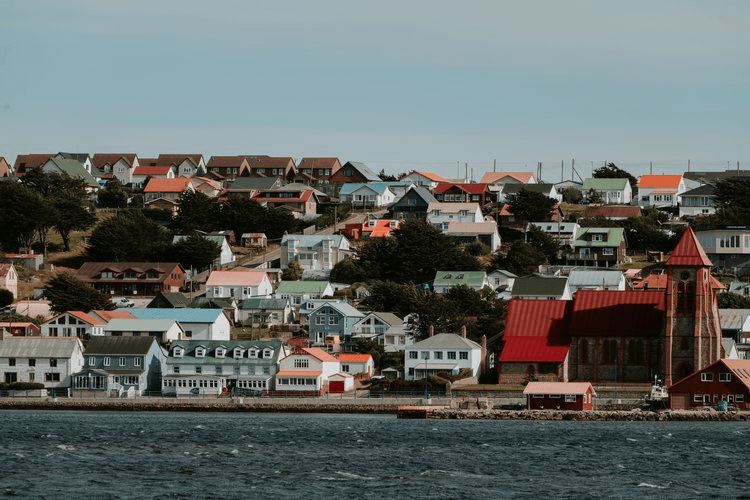
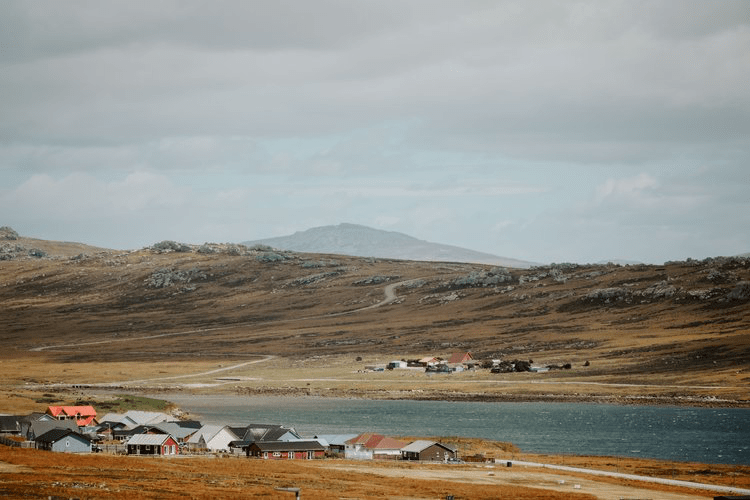
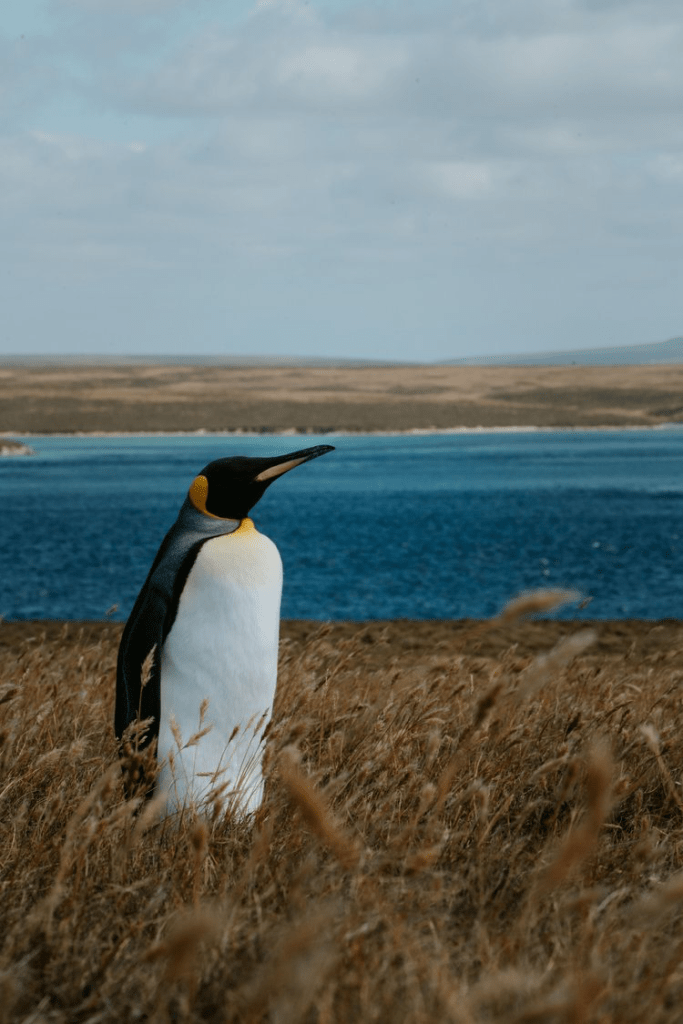
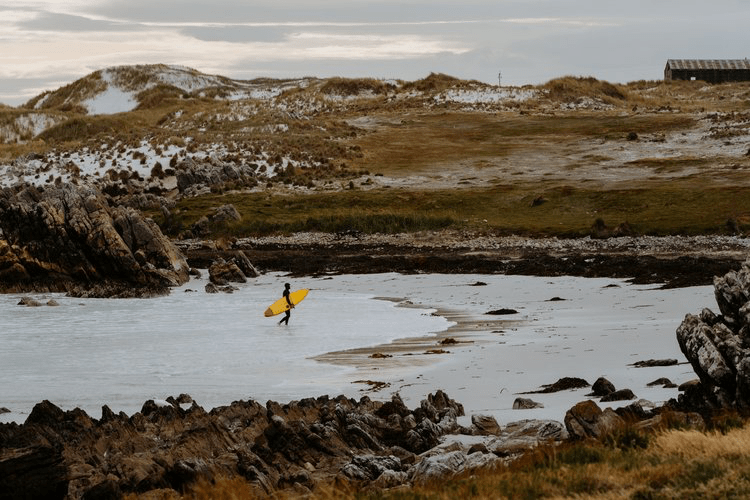
From afar, the islands look windswept, barren and dry. However on a closer look it is a world of infinite wilderness. Rugged cliffs are homes for the many Gentoo, Magellanic, King and Rockhopper penguins, the deep blue ocean full of Peale and Commerson’s dolphins and the expansive kilometres of land serve more than 450,000 sheep. That works out to about 140 sheep per person!
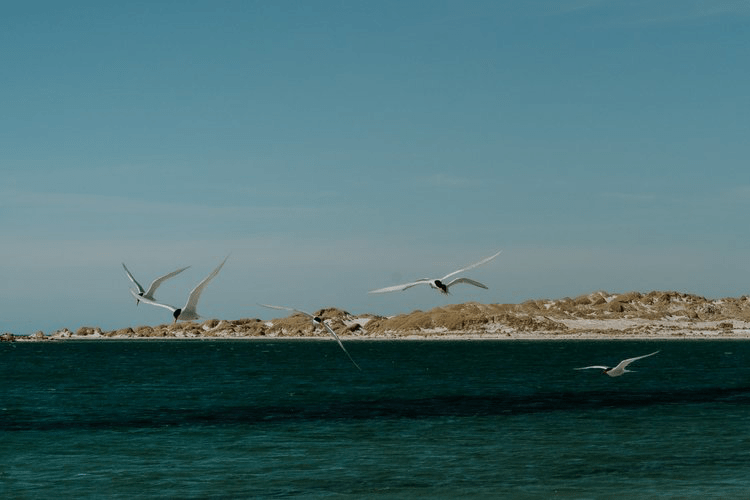
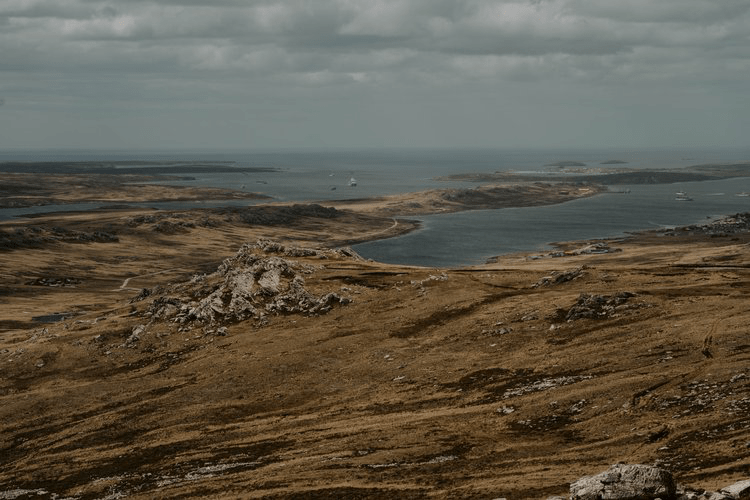
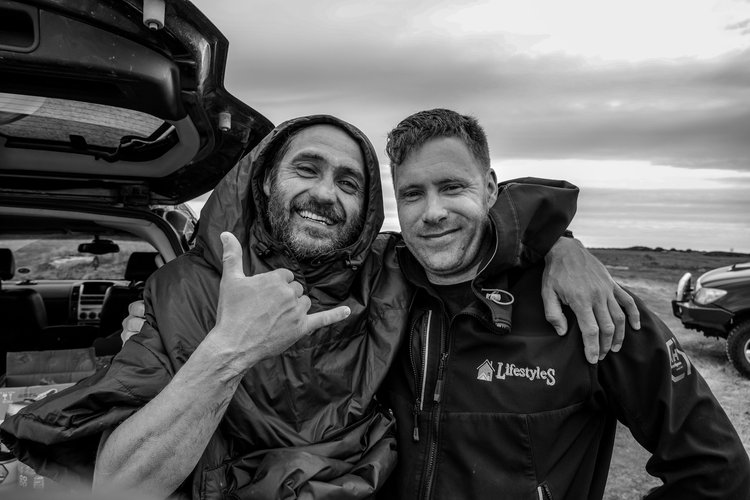
Our time in the Falkland Islands was extra special thanks to Sean and his family. Sean, his brother Jay and sister Kelly are the only three surfers living there. From the first day we sat down for a coffee at Shorty’s cafe, Sean, and his wife Amy, took us under their wings and made us feel like we were one of them. A night’s stay in their spare room, turned to many, which was much warmer than sleeping in the back of the car in our $10 sleeping bags purchased hurriedly before flying there.
The small adventures they took us on, have made for some great campfire stories. The main ones being:
- Four wheel driving to what felt like the end of the world, to find (and sometimes not find), some pretty waves where dolphins and seals could surf much better than us, to then set up our tents for the night right in front of the wave.
- Assisting with drafting approximately 1,000 sheep on the farm, in anticipation for sheering the following day. Seeing Laura chasing and tackling lambs across paddocks, and Ben helping with placing rings around their testicles for various reasons that a real farmer could explain better, made for some great laughs over a beer that night.
- Staying in some faraway cottage on Amy’s family farm, with no roads to it, where having ear plugs was almost necessary to block the noise of the nearby penguins. We are exaggerating a bit, but their next cottage further along does have penguins living under it! Their farm used to be the capital of the Falklands in the 1800’s! It has 38 buildings on their camp (another word for farm in the Falklands!).
- Helping on the renovation of Sean’s family farmhouse, also located on some faraway coastline, with not even a distinguishable track to get to it. This is hard to convey, but turning off the main road (a narrow gravel road that is) to go across paddocks for kilometres, and eventually reaching a cosy cottage that is heated by a lovely old peat oven, is quite a unique experience.
- Spending a few rainy days at the farm, sharing stories, playing guitars (them not us) and eating like royalty. The Falkland island is a place where there is no point being a vegetarian… and we fully embraced it
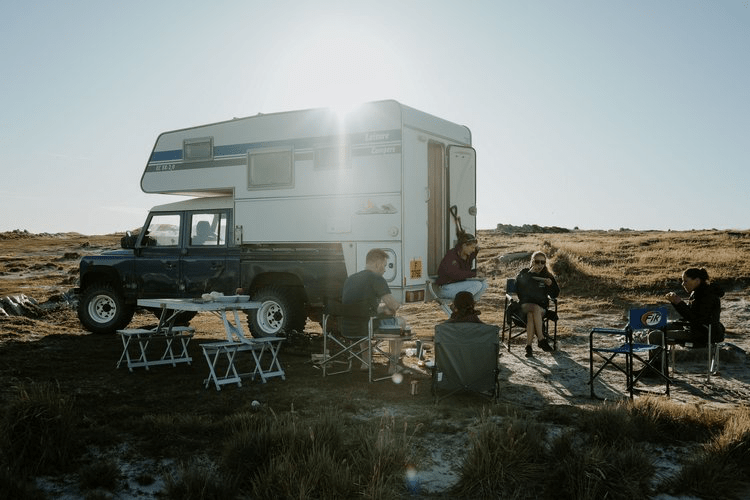


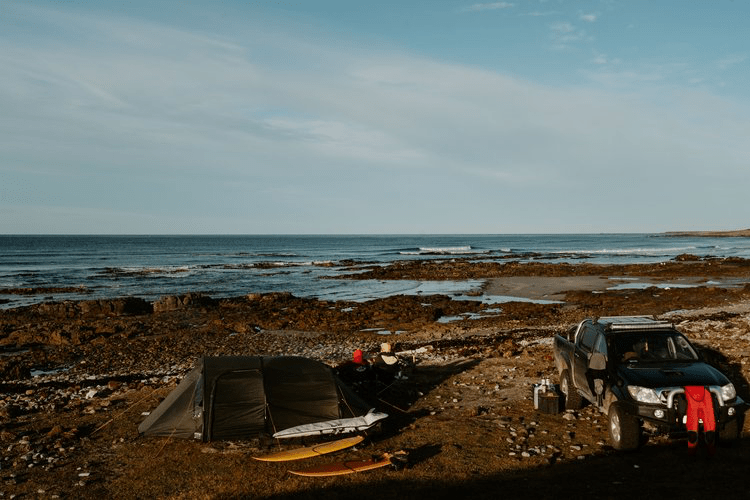
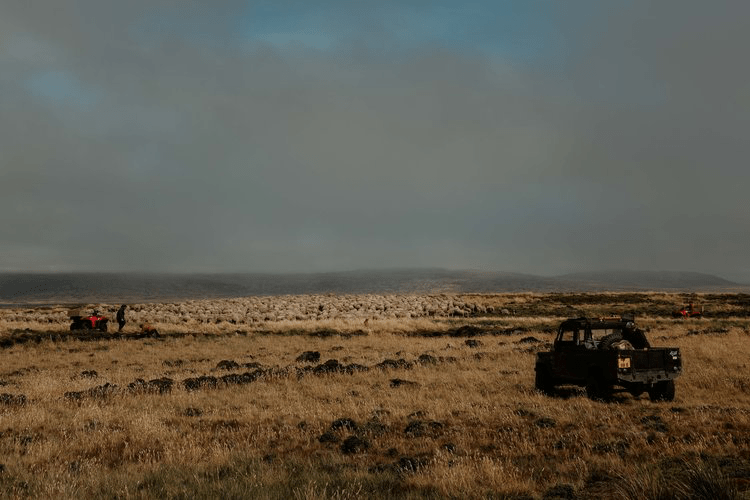
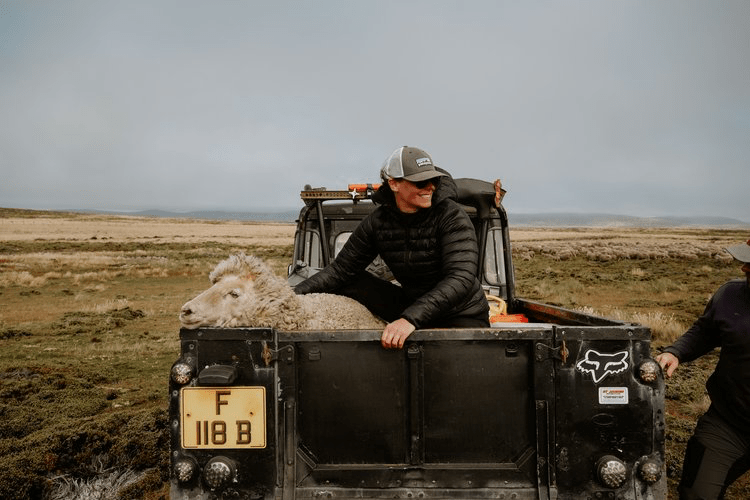
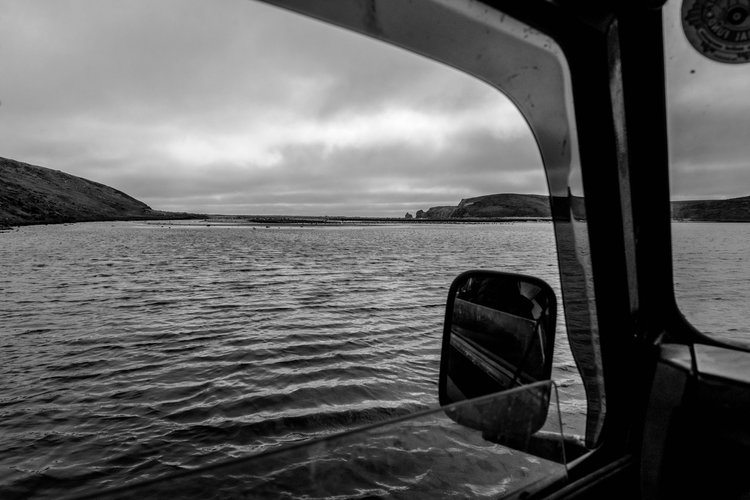
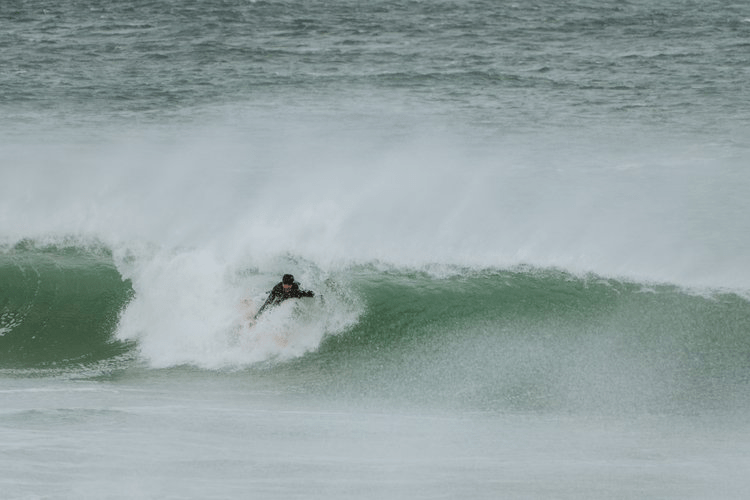
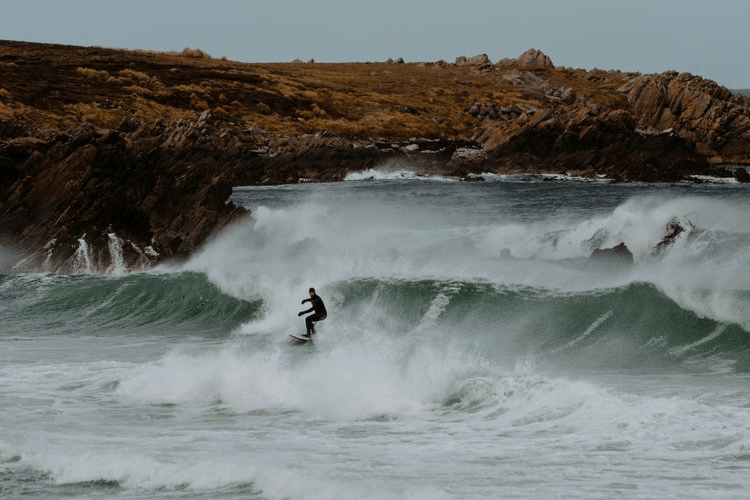
When we were not on such adventures, we would surf closer to Stanley, or walk around the coastline hoping that the surf would turn it on for us. It is quite a fickle place for waves, where the swells coming around from Cape Horn can disappear very quickly, and the winds can be tough to manage. The Falkland Islands sit in the ‘roaring forties’ and we felt it, almost daily!! We were instructed to park into the wind to make sure our rental car doors aren’t ripped off their hinges. Holding the door with two hands when opening it is an absolute must!
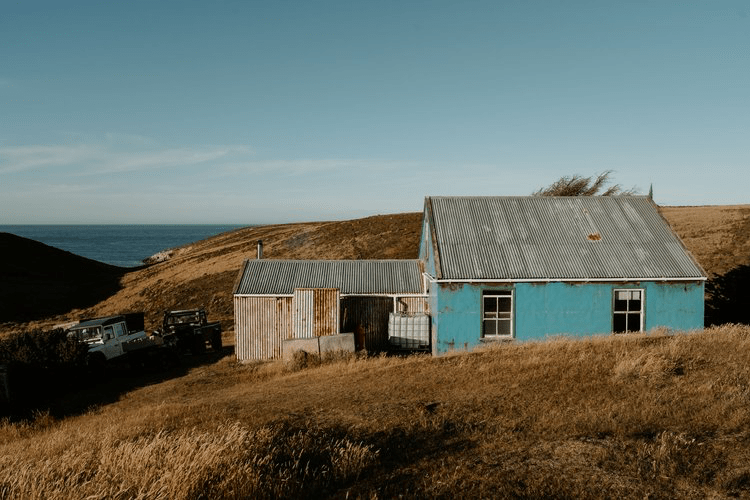
On the topic of cars, the Falkland island is the capital of Landrovers: not the fancy ones that city dwellers like to drive, but the 30 years old ones that have rarely been driven on bitumen, or gravel for that matter. In the Falklands, it is mostly cross-country! East Falkland, where we were, has a few main gravel roads leading to the very small settlements, sweeping and curling over the undulating landscape, whilst access to the rest of the island is either completely off-road or often following deep-rutted 4WD tracks on private farmland. It all makes for a great adventure, every drive you take.
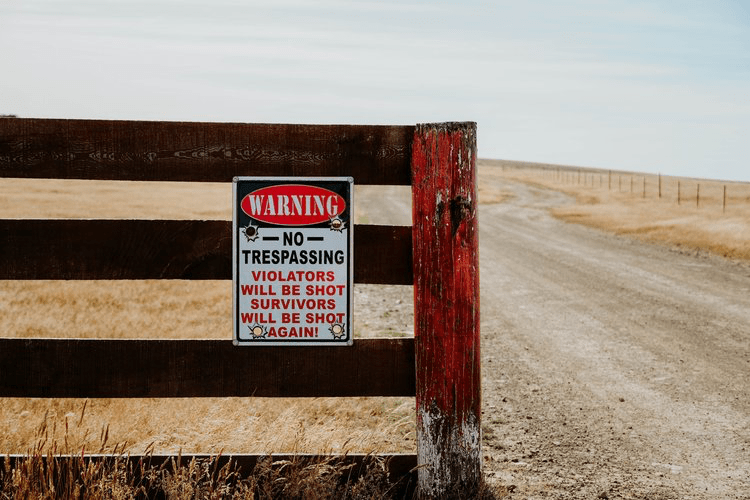
No wonder Sean can recall only around 5 groups of surfers coming here to surf. What makes it excessively tricky too, is that a majority of the islands are farmland, which makes accessibility quite difficult. The land owners are generally pretty good at granting access, but first you must seek permission, and finding them isn’t necessarily easy! These farms are in the tens of thousands of acres. We saw some funny signs on their entrance gates, one being ‘Warning! No trespassing. Violators will be shot, survivors will be shot again’. You also need knowledge of the landscape and environment, and a great respect for the island. Sean so generously gave us his time and all of the above to help us find breaks, with lineups full of dolphins, in some very beautiful locations on the East island. Without Sean’s help, knowledge and generosity, we would not have experienced the island in such a true way.
A little more about what we found interesting: the economy of the Falkland Islands, which first involved sealing, whaling and provisioning ships that came limping after sailing around Cape Horn, became heavily dependent on sheep farming for wool from the 1870s to 1980. It then diversified and now has income from commercial fishing, and more recently tourism as well. During the summer months, big cruise ships anchor in for the day on their way back from Antarctica. They seem quite out of place in Port Stanley, the main settlement with shops and all the necessities for the local population. They can double the population of the island instantly…and off they go again late afternoon!
The Falklanders (also nicknamed the Kelpers – because of the healthy kelp forests around the shoreline of the islands) are proud of their beautiful archipelago and have a phrase, ‘where nature is still in charge’. We love this and could see evidence of this through the fierce passion locals have for conserving the wildlife, the strict border and hazard controls in place at the military airport where we landed, commitment to wildlife research and the dedication farmers have to rehabilitating the land in some areas. Even seeing sheep and penguins in the same field was a sign of letting nature do its thing. Penguins do go kilometres inland as we realised!
We really enjoyed their authentic way of life. The internet might be slow and limited, but there is a wonderful sense of community and it is the rule to wave at every single car that passes (the hand gets tired during peak traffic!). Falklanders are humble, resourceful, fiercely proud of their home and all very kind. Some try their best at growing their own vegetables, other hunt or fish, and a few even eat penguin eggs. The culture of traditional dancing is still strong, and most kids get taught how to dance.
Looking back, there is a lot of controversy over the discovery of the Falkland Islands – the French, British, Spanish, and Argentinians have all claimed it theirs. Britain reclaimed the Falklands in 1833, however in 1982 Argentina invaded the Falkland Islands. Over a 72-day bloody battle near Stanley, Britain reclaimed it again. Remnants of the conflict can still be found. One sunny, almost ‘calm’ day, we went for a hike on the common land behind Stanley. No trees to keep us confined to a track, we followed our noses from peak to peak of the few mounts that sit behind the main town on the East island. We came across quite a few dried-up lakes (locals shared that these lakes have remained cracked and dry for the past few years – evidence of global warming) and it was here that we discovered part of a backpack, parachutist goggles and a shovel, discarded during the conflict. It was quite eery to discover such personal items and makes it all seem very real.
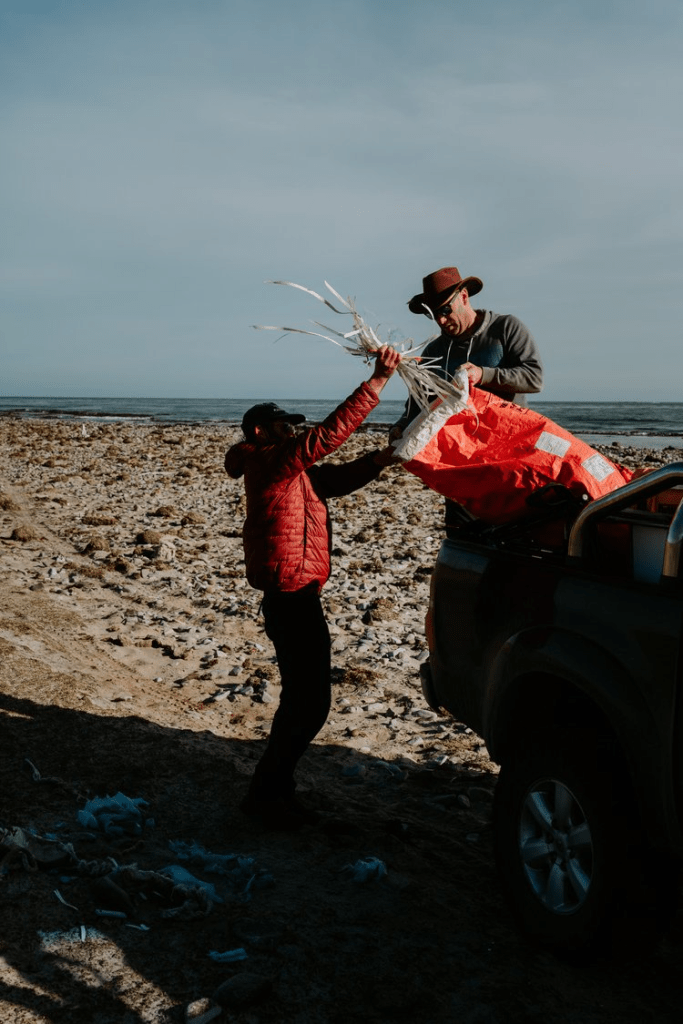
We were able to do two beach clean ups on the Falklands, which we posted on the Falklands community facebook page to invite people along. The locals were very grateful and we were even asked to do an interview with the local radio and tv station! A sure sign that the community is interested in doing the right thing by the environment. No travel comes without an environmental cost and we are very conscious of this, so it is a very small way to give back to the community and the special coastlines that we visit.
Whilst we felt like locals, we only scratched the surface of what life could be like on the Falklands…especially because we didn’t get to explore further than East Falkland!! In other words there are 699 islands still on the list 😉 Maybe the West and the many smaller islands will be explored at a later date.
We are so grateful to Sean, Amy and the Moffatt family to have shared these places and experiences with us – thank you and much love from us for such a special time!
Sending all the love and good vibes!
Laura and Ben
 The Duck Whisperer
Love it. You two are the real deal, authentic adventurers!
LikeLike
Hi Ben,
Love the story. Take care.
Mark Lennox
LikeLike